

Rhodope Mountains topographic map
Click on the map to display elevation.
Rhodope Mountains
In geomorphological terms, the Rhodopes are part of the Rila-Rhodope massif, which is the oldest landmass on the Balkan peninsula. The Rhodopes are spread over 14,735 square kilometers (5,689 sq mi), of which 12,233 square kilometers (4,723 sq mi) are on Bulgarian territory. They have the greatest extent of any single mountain range in Bulgaria. The mountains are about 240 kilometers (149 mi) long and about 100 to 120 kilometres (62 to 75 mi) wide, with an average altitude of 785 meters (2,575 ft). To the north the mountain slopes descend steeply towards the Upper Thracian Plain. To the west, the Rhodopes reach the Avram saddle, Yundola and the valley of the Mesta River. To the south and east they extend to the coastal plains of Greek Thrace. The Rhodopes are a complex system of ridges and deep river valleys.
About this map

Name: Rhodope Mountains topographic map, elevation, terrain.
Location: Rhodope Mountains, Bulgaria (40.84291 23.03833 42.35246 26.49627)
Average elevation: 501 m
Minimum elevation: -3 m
Maximum elevation: 2,848 m
Other topographic maps
Click on a map to view its topography, its elevation and its terrain.
Sofia
Bulgaria > Sofia-City > Sredec
Sofia City Province has an area of 1344 km2, while the surrounding and much bigger Sofia Province is 7,059 km2. Sofia's development as a significant settlement owes much to its central position in the Balkans. It is situated in western Bulgaria, at the northern foot of the Vitosha mountain, in the Sofia Valley…
Average elevation: 746 m
Sofia
Bulgaria > Sofia-City > Sredec
Sofia City Province has an area of 1344 km2, while the surrounding and much bigger Sofia Province is 7,059 km2. Sofia's development as a significant settlement owes much to its central position in the Balkans. It is situated in western Bulgaria, at the northern foot of the Vitosha mountain, in the Sofia Valley…
Average elevation: 746 m
Bansko
Bansko (Bulgarian: Банско [ˈbansko]) is a town in southwestern Bulgaria, located at the foot of the Pirin Mountains at an elevation of 1200m above sea level. It is a ski resort.
Average elevation: 1,034 m



Bansko
Bansko lies at the foot of the Pirin Mountains, not far from the national park of the same name, in the valley of the Nestos River at an elevation of 925 meters above sea level. It is a ski resort. The city is about 160 km from Sofia and about 220 km from Thessaloniki.
Average elevation: 1,597 m




Sredna Gora
Bulgaria > Sofia > Koprivshtitsa
The mountain is divided into three parts by the rivers Topolnitsa and Stryama — Ihtimanska Sredna Gora to the west, Sashtinska Sredna Gora in the center, and Sarnena Sredna Gora to the east. Compared to most other mountain ranges in Bulgaria, Sredna Gora has lower average altitude, which determines higher…
Average elevation: 1,300 m








Iskar
The Iskar headwaters consist of three forks in the northern slopes of Rila, Bulgaria's highest mountain range. The 23 km long Cherni (black) Iskar is considered the main stem of the river. It takes its source from the Chamovsko Lake (2,500 m) to the north-east of the summit of Damga (2,669 m) and from there…
Average elevation: 576 m

Pazardzhik
The northern parts of the region include the middle ridges of the Sredna Gora mountain range, to the south the relief flattens and forms the westernmost parts of the Upper Thracian Plain and to the south are located the Rhodope Mountains where most of the forests are situated. The highest point of the region…
Average elevation: 931 m


Vihren
Vihren (Bulgarian: Вихрен [ˈvixrɛn]) is the highest peak of Bulgaria's Pirin Mountains. Reaching 2,914 metres (9,560 ft), it is Bulgaria's second and the Balkans' third highest, after Musala and Mount Olympus. Although Vihren is deprived of lakes and streams due to the karst topography, a number of…
Average elevation: 2,442 m



Sofia
Bulgaria > Sofia-City > Sredec
Sofia City Province has an area of 1344 km2, while the surrounding and much bigger Sofia Province is 7,059 km2. Sofia's development as a significant settlement owes much to its central position in the Balkans. It is situated in western Bulgaria, at the northern foot of the Vitosha mountain, in the Sofia Valley…
Average elevation: 746 m


Yantra
The Yantra (/ˈjæntrə/ YAN-trə; Bulgarian: Янтра, romanized: Jantra, IPA: [ˈjantrɐ]) is a river in northern Bulgaria, a right tributary of the Danube. Reaching a length of 285 km, it is the seventh longest river in Bulgaria and the third longest Bulgarian tributary of the Danube. In the middle and…
Average elevation: 302 m



Kyustendil
For the most part, the climate is transcontinental, but at higher altitudes it is mountainous. The main drainage river is Struma whose subsidiaries are the Treklyanska, Dragovishtitsa, Bistritsa, Slokoshtitsa, Novoselska, Dzherman and Rila rivers. Subterranean water levels are relatively high. Near the village…
Average elevation: 989 m




Borovets
Borovets (Bulgarian: Боровец [ˈbɔrovɛt͡s]), known as Chamkoria (Чамкория [ˈt͡ʃam koˈrijɐ]) until the middle of the 20th century, is a popular Bulgarian mountain resort situated in Sofia Province, on the northern slopes of Rila mountain, at an elevation of 1350 m.
Average elevation: 1,394 m
Rila mountain range
Rila (Bulgarian: Рила, pronounced [ˈriɫɐ]) is the highest mountain range of Bulgaria, the Balkan Peninsula, and Southeast Europe. It is situated in southwestern Bulgaria and forms part of the Rila–Rhodope Massif. The highest summit is Musala at an elevation of 2,925 m which makes Rila the sixth…
Average elevation: 2,525 m

Gorno Kraishte
The terrain is mountainous and hilly, covering parts of Western Rila and Rhodope Mountains and the valley in the upper reaches of the Mesta River. The average altitude is 850 meters. The climate is transitional continental with an average annual temperature is 8 °C. Winters are cold, with an average January…
Average elevation: 866 m



Rhodope Mountains
In geomorphological terms, the Rhodopes are part of the Rila-Rhodope massif, which is the oldest landmass on the Balkan peninsula. The Rhodopes are spread over 14,735 square kilometers (5,689 sq mi), of which 12,233 square kilometers (4,723 sq mi) are on Bulgarian territory. They have the greatest extent of…
Average elevation: 441 m
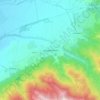


Elhovo
Central to this region is the field of Elhovo. Its flat surface extends on both sides of the river Tundzha which is flowing from the north. The average elevation is 100–150 m. In the peripheral parts the field gradually passes into the gentle slopes of the Manastira and the Dervent Heights.
Average elevation: 121 m
