Geolocate

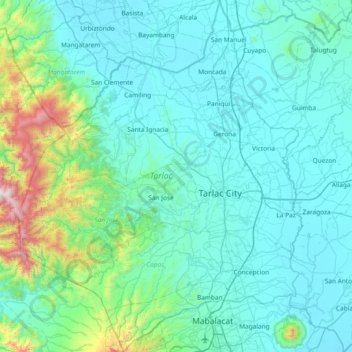
Tarlac topographic map

Click on the map to display elevation.

Tarlac

Like the rest of Central Luzon, the province has three distinct seasons: summer from March to June, monsoon rain from July to early October, and monsoon winter from late October to February. Summer months, especially during May bring frequent, sometimes severe, thunderstorms with high winds, thunder, and hail. It is the coldest province in the region, with a yearly average of 23 °C (73 °F). Cold snap is not common, which gradually receives unusual average temperature of 17 °C (63 °F), while maximum daytime peaks 27 °C (81 °F). It is also the windiest province in the region during February and March due to its widely lowland altitude and extreme climate transition. The lowest temperature ever recorded is 11.2 °C (52.2 °F) and the highest temperature at 38.8 °C (101.8 °F).

Wikipedia (CC-BY-SA 3.0)

About this map

Name: Tarlac topographic map, elevation, terrain.

Location: Tarlac, Central Luzon, Philippines (15.16174 120.16247 15.87898 120.76478)

Average elevation: 217 m

Minimum elevation: 2 m

Maximum elevation: 1,937 m

Other topographic maps

Click on a map to view its topography, its elevation and its terrain.
Baguio

Philippines

In 1903, Filipinos, Japanese and Chinese workers were hired to build Kennon Road, the first road directly connecting Baguio with the lowlands of La Union and Pangasinan. Before this, the only road to Benguet was Naguilian Road, and it was largely a horse trail at higher elevations. Camp John Hay was…

Average elevation: 881 m
Cebu City

Philippines > Cebu > Cebu City

Average elevation: 140 m

Cavite

Philippines

Average elevation: 77 m

Quezon City

Philippines

Founded as a pueblo by Saint Pedro Bautista in 1590, San Francisco del Monte may be considered Quezon City's oldest district. The original land area of the old town of San Francisco del Monte was approximately2.5 square kilometres (1.0 sq mi) and covered parts of what is currently known as Project 7 and 8 and…

Average elevation: 57 m
Binangonan

Philippines > Rizal

Average elevation: 21 m

Malolos

Philippines > Bulacan

Malolos is relatively flat of about 0.81% to a gently sloping of 2.17%. The slope of the land descends towards west, southwest to southern direction. The highest land elevation is at about 6.0 meters above sea level while the lowest is only half a meter below sea level. A network of natural waterways and…

Average elevation: 6 m
Rizal

Philippines

Average elevation: 95 m

Daraga

Philippines > Albay

67.3% of the total municipal land area has a predominantly low elevation of up to 100 metres (330 ft). The surface terrain is generally characterized by combination of level to nearly level areas, gentle to undulating areas and undulating to rolling areas.

Average elevation: 76 m
Mandaluyong

Philippines

Another claims that the Spaniards named the place based on the report of a navigator named Acapulco, who saw the rolling hills frequently being lashed at by daluyong (“big waves from the sea”). This seems to confirm traditional pre-Hispanic stories that giant waves from the sea would meet the adjoining…

Average elevation: 33 m

Dinanum

Philippines > La Union

Average elevation: 51 m

Taguig

Philippines

Average elevation: 39 m

Basag

Philippines > Butuan

Average elevation: 42 m

Meycauayan

Philippines > Bulacan

Average elevation: 27 m

Bongabon

Philippines > Nueva Ecija

Average elevation: 73 m

Echague

Philippines > Isabela

Average elevation: 71 m

Norzagaray

Philippines > Bulacan

Average elevation: 66 m

Butuan

Philippines

Average elevation: 115 m

Argao

Philippines > Cebu

Average elevation: 31 m

Kinoguitan

Philippines > Misamis Oriental

Average elevation: 60 m

Leyte

Philippines

Average elevation: 54 m

San Ildefonso

Philippines > Ilocos Sur

Average elevation: 9 m

Legazpi

Philippines > Albay

Legazpi's topography is generally plain on the northeastern areas, with slopes ranging from five to fifteen degrees. The southern areas have mostly rolling to hilly terrain. In the city's coastal areas, the terrain varies from plain (north) to hilly (south). Legazpi is criss-crossed by several rivers including…

Average elevation: 150 m
Mintal

Philippines > Davao City

Average elevation: 130 m

Panglao Island

Philippines > Bohol

Average elevation: 47 m

Lapu-Lapu

Philippines

Average elevation: 93 m

Bacolod

Philippines

Bacólod (English: Bacolod), is derived from bakólod (Old Spelling: bacólod), the Old Hiligaynon (Old Ilonggo) (Old Spelling: Ylongo and Ilongo) word for a "hill, turtle, mound, rise, hillock, down, any small eminence or elevation", since the resettlement was founded on a stony, hilly area, now the barangay…

Average elevation: 49 m

Burgos

Philippines > Ilocos Norte

Another tourist attraction worth mentioning is the historic Cape Bojeador Lighthouse, built during the latter part of the 19th century. Facing the South China Sea, it serves as a beacon to passing ships and to local fishermen. Because of its high elevation, it offers travelers with a panoramic view of the…

Average elevation: 85 m
El Salvador

Philippines > Misamis Oriental

Average elevation: 69 m

Matnog

Philippines > Sorsogon

Average elevation: 46 m

Tandag

Philippines > Surigao del Sur

Average elevation: 80 m

Basud

Philippines > Camarines Norte

Average elevation: 14 m

Masagana

Philippines > Oriental Mindoro

Average elevation: 58 m

Bagong Nayon 1

Philippines > Rizal

Average elevation: 167 m

Marinduque

Philippines

Average elevation: 54 m

Parañaque

Philippines

Average elevation: 14 m

Pasig

Philippines

Average elevation: 46 m

Bohol

Philippines

Average elevation: 116 m

Cebu

Philippines

Average elevation: 89 m

Samar

Philippines

Average elevation: 38 m

Masbate

Philippines

Average elevation: 54 m

Valenzuela

Philippines

The highest elevation point is 38 meters (125 ft) above sea level. Having a surface gradient of 0.55% and a gentle slope, hilly landscape is located in the industrial section of the city in Canumay. The average elevation point is 2 meters (6.6 ft) above sea level.

Average elevation: 24 m
Alcoy

Philippines > Cebu

Average elevation: 137 m

Carcar

Philippines > Cebu

The land is generally level with less than 18% slope comprising 78.7% of the total land area. Areas with slopes ranging from 18 to 50% cover 19.3% of the total land area and those over 50% slope comprise approximately 1.9%. The highest recorded elevation is a little over 660 metres (2,170 ft) above sea level,…

Average elevation: 97 m
Lucban

Philippines

Average elevation: 504 m

Cabuyao

Philippines > Laguna

Average elevation: 93 m

Panabo

Philippines > Davao del Norte > Panabo

Average elevation: 30 m

Dagupan

Philippines > Pangasinan

Average elevation: 12 m

San Juan

Philippines

"San Juan" is a contraction of the city's traditional name of "San Juan del Monte" (lit. 'Saint John of the Mountain'). As with numerous other places in the Philippines, the name combines a patron saint and a toponym; in this case Saint John the Baptist with the locale's hilly terrain and relatively higher…

Average elevation: 35 m

San Roque

Philippines > Camarines Norte

Average elevation: 2 m

Patag Island

Philippines

Average elevation: 0 m

Kota Island

Philippines

Average elevation: 0 m

Lankiam Cay

Philippines

Average elevation: 0 m

Iriga

Philippines

Average elevation: 115 m

Davao Gulf

Philippines

Average elevation: 0 m

Angadanan

Philippines > Isabela

Average elevation: 63 m

Balbalan

Philippines > Kalinga

Average elevation: 1,071 m

Lawak Island

Philippines

Average elevation: 0 m

Abacan River

Philippines > Pampanga > Angeles

Average elevation: 182 m

Ocampo

Philippines > Camarines Sur

Average elevation: 87 m

Surigao del Sur

Philippines

Average elevation: 274 m

Candaba

Philippines

Average elevation: 6 m

Davao City

Philippines

Average elevation: 65 m

Kinatihan II

Philippines

Average elevation: 22 m

Cale

Philippines > Batangas > Tanauan

Average elevation: 151 m

Ibabang Bukal

Philippines

Average elevation: 254 m

Cabatang

Philippines

Average elevation: 335 m

Lubas

Philippines > Benguet

Average elevation: 1,444 m

Pinget

Philippines

Average elevation: 1,430 m

Caloocan

Philippines

Average elevation: 81 m

Aurora Hill North Central

Philippines

Average elevation: 1,479 m

Besigan

Philippines

Average elevation: 584 m

Talomo River

Philippines

Average elevation: 201 m

Asin

Philippines

Average elevation: 1,321 m

Catambungan

Philippines

Average elevation: 5 m
Tablas Strait

Philippines

Average elevation: 0 m
Buenavista

Philippines

Average elevation: 112 m
Poliwes

Philippines

Average elevation: 1,397 m

Teodora Alonzo

Philippines

Average elevation: 1,459 m

Manggahan

Philippines

Average elevation: 7 m

Bakakeng Norte

Philippines

Average elevation: 1,379 m

Bacsil

Philippines > La Union > Bacsil

Average elevation: 163 m

Crossing Bayabas

Philippines

Average elevation: 22 m

Bakakeng Central

Philippines

Average elevation: 1,412 m

Tarlac

Philippines

Average elevation: 109 m

Solsona

Philippines > Ilocos Norte

Average elevation: 63 m

Pacdal

Philippines

Average elevation: 1,448 m

Macasandig

Philippines

Average elevation: 42 m

Batanes

Philippines

Average elevation: 26 m

Nueva Ecija

Philippines

Average elevation: 112 m

Nueva Vizcaya

Philippines

Average elevation: 107 m

Antique

Philippines

Average elevation: 46 m

Zone IV

Philippines

Average elevation: 4 m

Albay

Philippines

Average elevation: 48 m

Sorsogon

Philippines

Average elevation: 40 m

Camarines Sur

Philippines

Average elevation: 56 m

Mount Isarog

Philippines > Camarines Sur > Calabanga

Mount Isarog is an active stratovolcano located in the province of Camarines Sur, Philippines, on the island of Luzon. The mountain has active fumaroles and hot springs. It has an elevation of 2,011 m (6,598 ft) above mean sea level.

Average elevation: 1,565 m

Mines View

Philippines

Average elevation: 1,431 m

Bulacan

Philippines

Average elevation: 105 m

City Camp Proper

Philippines

Average elevation: 1,430 m

Gear up for your next adventure:

🥾Hiking Boots - Sturdy boots providing ankle support and traction on rugged trails
🐕Hiking Dog Pack - Let your canine companion carry their own water and food
🔦LED Headtorch - Bright and durable light for night activities
👟Leg Gaiters - Keep debris, mud, and snow out of your boots
💧Reusable Water Bottle - Durable water bottles for hydration on trails

As an Amazon Associate, this site earns from qualifying purchases at no extra cost to you.